“The beauty of the world lies in the diversity of its people.” – Unknown
Exploring the Ngäbe-Buglé Culture
While traveling back to Panama City, a young mother seated beside me breastfeeds her child without hesitation. I am struck by the naturalness of this act, which in many cultures, particularly in North America, is often met with stigma. However, such is not the case for the Ngäbe-Buglé people.
A Rich Tapestry of Ethnic Diversity
Panama is a country characterized by its ethnic diversity, particularly in Panama City, influenced by the construction of the canal. Outside the urban center, there are seven indigenous groups, with the Ngäbe-Buglé being the most prominent, primarily located in the Boquete and Isla Colón regions.
The Comarca Ngäbe-Buglé, home to approximately 200,000 individuals, was established in 1997 when the government recognized land rights for this community. The Comarca comprises two distinct groups: the Ngäbe and the Buglé, with the latter being significantly smaller in population.
Distinct Cultural Features
The Ngäbe are easily recognizable with their high cheekbones, straight black hair, tanned skin, and stocky build. They often wear vibrantly colored clothing decorated with triangle motifs that symbolize the surrounding mountains.

A Complex Relationship with Outsiders
The Ngäbe people tend to be reserved, largely due to historical mistreatment by outsiders, resulting in a profound distrust. Their society was significantly disrupted prior to the establishment of the Comarca by the expansion of banana plantations and the construction of the Inter-American Highway in their territory, which ultimately led many to seek work elsewhere.
This region is also home to one of the largest copper deposits, the Cerro Colorado copper deposit. The exploitation of natural resources has prompted the Ngäbe-Buglé community to advocate vigorously against human rights violations perpetrated by the Panamanian authorities.
Preservation of Tradition and Community
Deeply rooted in their heritage, the Ngäbe-Buglé maintain a strong reverence for their land and customs. They prioritize tradition and cultural values, demonstrating a commitment to preserving their identity, unlike many other cultures that have lost theirs.
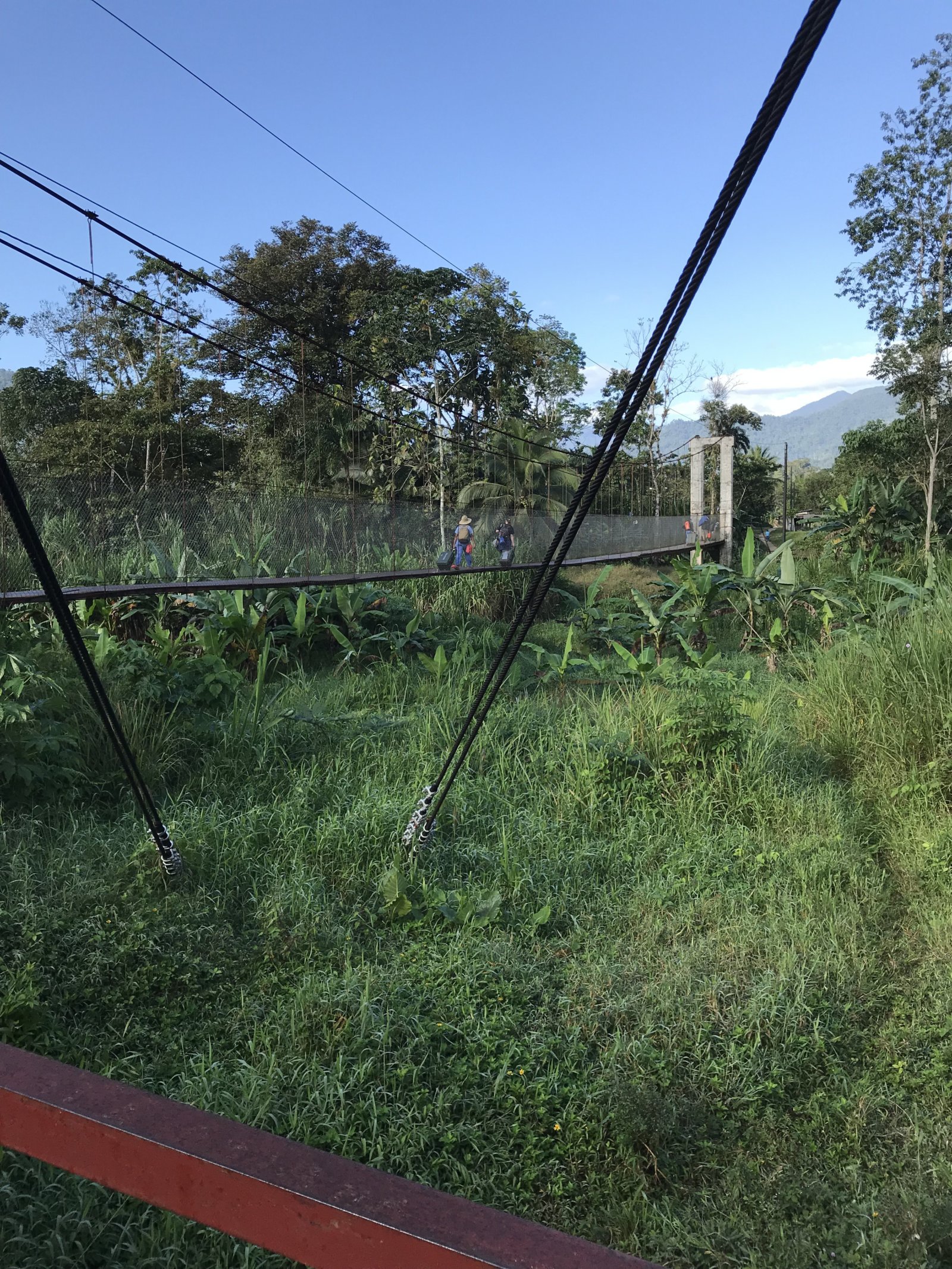
During my volunteer experience in a Ngäbe-Buglé village, I witnessed a community intricately woven into the fabric of the mountains alongside a winding river. Their homes, elevated on stilts, were enveloped by dense jungle foliage.
This community exuded a genuine sense of togetherness, where children transported eggs and poultry for sale, soccer games filled the afternoons, and women washed clothes at the river’s edge. Life here is simple; dogs, chickens, and a few pigs roam freely, with individuals identifying more with their community than their ethnicity.
Cultural Reflection
My observations revealed subtle yet profound differences between their way of life and my own. The casualness with which women breastfeed their children in public stood out, a stark contrast to the stigma often experienced in North America.

This experience prompted me to reflect on societal pressures that induce shame for what should be a natural act. It is my hope that those who criticize breastfeeding in public can gain perspective from observing the Ngäbe-Buglé.
Stepping outside the comforts of urbanity reveals the intricate cultural tapestry of a nation, inviting a shedding of preconceived notions and an embrace of authenticity.
During my time with the Ngäbe-Buglé, I perceived a simplicity and authenticity in their lives. The strong bonds they maintain within their community are admirable, overshadowing the individualistic tendencies pervasive in many societies.
In contrast to a world increasingly detached from genuine connections, the Ngäbe-Buglé exemplify resilience and community strength. Their enduring relationship with the land and one another serves as a poignant reminder of the values that can be easily overlooked in modern life.