banner-homepage-gotraveldaily
Headlines

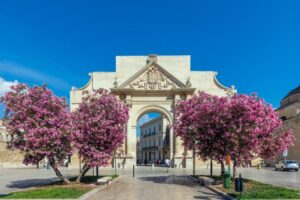
Top 15 Must-See Attractions in Lecce, Italy

Lecce is often referred to as the Florence of the South owing to its plethora of exquisite historical edifices and its strategic location in the “Dog Leg” of Italy. This city is situated in the southernmost part of Italy, directly across from Albania along the Adriatic Sea, with a current population of approximately 94,000. Lecce Stone is a principal export of the city, prized for its softness and workability, which has allowed for its extensive use in the creation of various monuments throughout the area.
Read More
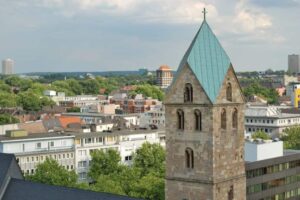
Top 25 Must-Do Activities in Dortmund, Germany

Once driven by heavy industry, Dortmund, the largest city in the Ruhr area, has transitioned into a high-tech manufacturing hub. The historical mines, steelworks, and breweries now serve as monumental reminders of the thriving post-war era. Noteworthy sites, such as the Zeche Zollern colliery, still proudly showcase their impressive steam turbines and exquisite Art Nouveau architecture.
Read More

Top 15 Must-See Attractions in Pisa, Italy

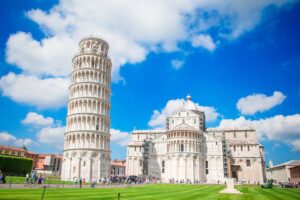
Pisa is an iconic destination and one of the most renowned cities in the region of Italy. While many travelers pass through Pisa on their way to Florence, this city offers an array of attractions beyond its famous leaning tower. Situated on Italy’s western coast, Pisa is conveniently located just 20 minutes from the Ligurian Sea and boasts excellent transport connections to Florence, Livorno, and La Spezia. Despite its modest population of approximately 91,000, it has historically been a significant and influential city within the Tuscany region of Italy.
Read More

Top 15 Attractions in Braunschweig, Germany

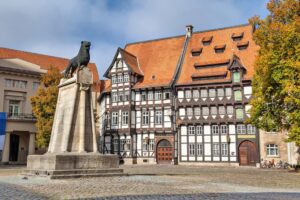
In Lower Saxony, Braunschweig (also referred to as Brunswick) is the largest city situated between Berlin and Hanover. The city was established by the Duke of Saxony, Henry the Lion, a member of the Welf Dynasty that remained influential in Braunschweig until 1918. During the Middle Ages, the city emerged as a significant trading center and was among the last nine remaining members of the Hanseatic League.
Read More

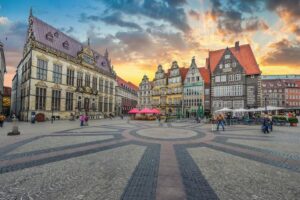
Top 25 Attractions and Activities in Bremen, Germany

In Medieval times, the Weser River served as a vital conduit for trade in Europe, positioning Bremen as a prominent Free Hanseatic City from the 12th century. The city’s legacy in maritime commerce is well-established, with the introduction of exotic goods like coffee starting in the 17th century. Bremen was home to Germany’s first coffee house in the 17th century, and Ludwig Roselius, a coffee merchant based in Bremen, notably invented decaffeinated coffee in the early 1900s.
Read More

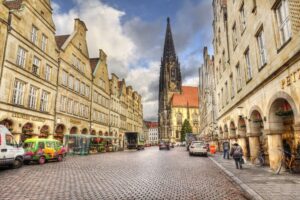
Top 15 Must-Experience Activities in Münster, Germany

A historic university city, Münster serves as the capital of Westphalia and showcases a skyline defined by the Romanesque and Gothic towers of its medieval churches. For several centuries until 1801, the city operated under the rule of a Catholic Prince-Bishopric. This governance was only briefly disrupted by an Anabaptist rebellion, which was violently subdued through a siege, resulting in the gruesome execution of its leaders whose remains were displayed in cages over the Prinzipalmarkt square.
Read More
Back To Top