Discover the essential guide for embarking on the transformative Kailash Mansarovar Yatra, one of the world’s holiest pilgrimages.
Best Time for Kailash Mansarovar Yatra
The optimal time for visiting Kailash varies based on individual preferences. Typically, spring and autumn are the most favorable seasons. Spring extends from April to June, while autumn spans September to October, both offering pleasant weather, moderate temperatures, and clear skies. Alternatively, summer, from July to August, marks peak tourism but tends to attract larger crowds.
Where Does Your Kailash Journey Begin?
Your journey commences in Kathmandu, the picturesque capital of Nepal and a significant gateway to Tibet. Visitors can explore the city’s rich cultural and historical sites, such as the UNESCO World Heritage-listed Pashupatinath Temple and Swayambhu Stupa, before proceeding to Kailash.
Navigate the Route to Kailash Mansarovar
There are four primary routes to Mount Kailash and Lake Mansarovar, with three originating in Nepal. The only Indian route is currently under construction. Below is an overview of the accessible routes:
1. Rashuwagadhi, Nepal
This route is currently available and spans approximately two weeks. The trail includes:
Kathmandu
Dhunche
Rasuwagadhi
Kerung
Saga
Lake Mansarovar
Darchen
Mount Kailash
2. Tatopani-Kodari, Nepal
This route remains closed due to substantial damage from the 2015 earthquake. Currently, it can only be traversed by locals and is not open to foreign visitors.
3. Simikot Route, Nepal
This popular 20-day trek leads through stunning regions of western Nepal. However, this route is also currently restricted by Tibetan authorities.
4. Darchula-Lipulekh Road, India
As the newest route, this option is not entirely constructed yet. Permission from Tibetan authorities is still pending, which has caused delays.
Updated Itinerary Plan for Kailash Mansarovar Yatra
With the current access to Kailash via Kerung, an updated itinerary has been formulated, emphasizing cultural and spiritual experiences along the journey. The comprehensive itinerary from Kathmandu to Kailash is outlined below:
Itinerary
Maximum Altitude
Walking/Hiking
Day 01: Arrive in Kathmandu
1,350m/4,429ft
Day 02: Pashupatinath Darshan, Boudhnath Stupa and Patan Visit
1,350m/4,429ft
Day 03: Kathmandu to Nepal-Tibet Border at Rasuwa Ghadhi
1,800 m/5,905 ft
6-7 hrs
Day 04: Easy day to Kerung to acclimatize
2,700m/8,858ft
Day 05: Drive from Kerung to Saga
4,600m/15,093ft
5-6 hrs
Day 06: Drive from Saga to Manasarovar
4,590m/15,060ft
8-9 hrs
Day 07: Travel to Darchen – The Gateway to Mount Kailash
4,700m/15,420ft
4 hrs
Day 08: Parikrama to Dehara Puk
5,100m/16,732ft
4-6 hrs
Day 09: A Day Hike to Charansprash (Optional)
5,500m/18,044ft
8-9 hrs
Day 10: Parikrama to Dolma-La Pass – The Most Challenging and Sacred Day of our Pilgrimage Yatra
5,650m/18,536ft
10-12 hrs
Day 11: Conclusion of Parikrama and Return to Saga
4,600m/15,093ft
3 hrs
Day 12: Return to Kathmandu from Saga via Kerung
1,350m/4,429ft
11-12 hrs
Day 13: Contingency Day – Preparing for the Unexpected
1,350m/4,429ft
Day 14: Fly Home Sweet Home – A Journey’s End
1,350m/4,429ft
How to Prepare Your Body and Mind for the Journey?
The success of your Kailash Yatra largely hinges on your physical preparation for the demanding Himalayan terrain. Here are critical preparation strategies:
Follow a consistent exercise regimen, including cardio and strength training, for 3 to 6 months prior to departure.
Focus on endurance and stamina development through long walks in rocky conditions.
Participate in short hikes or treks to build physical readiness.
Prioritize acclimatization to higher altitudes by ascending gradually during the trip.
Practice mindfulness or meditation to enhance your spiritual readiness.
Undergo a comprehensive health assessment before embarking on the journey.
Packing Guide for Kailash Yatra
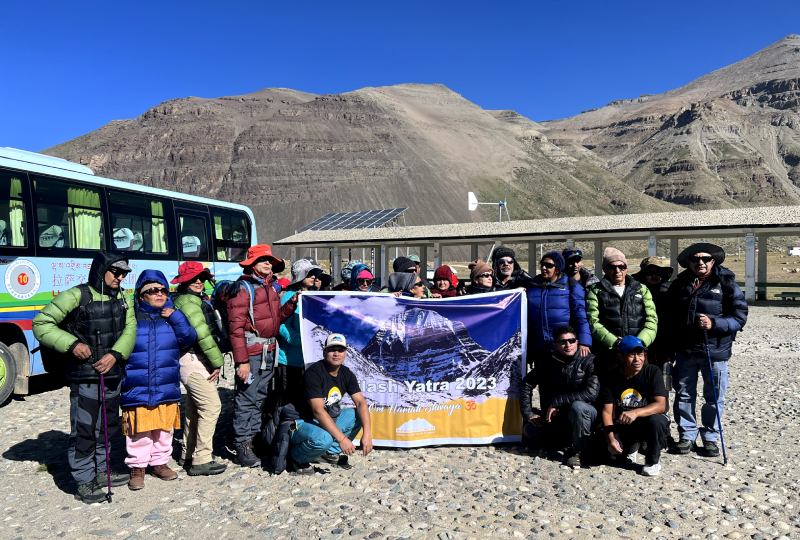
Himalyan Glacier Clients Group Photo at Darken
Preparing for a challenging high-altitude journey necessitates a meticulously curated packing list. Essential items to consider include:
Warm clothing
Extra socks and gloves
Travel attire, including cargo pants and waterproof garments
Sunglasses
High-quality hiking boots
Hats
Headlamps
Hot water bottle
Trekking poles
Trekking bag
Travel documents
First aid supplies and medications
Toiletries
Transportation
For the Kailash Mansarovar Yatra, land transportation remains the only available option. Travel from Kathmandu to the Nepal-Tibet border may be facilitated by jeep or helicopter, depending on your preferences and budget. Following border crossing, bus transport is utilized to navigate Tibetan territory.Traveling via Tourist Bus in Tibet on the way to Mount Kailash
Food
Food preferences are catered to during the Kailash journey, ensuring that meals align with individual dietary needs. For many Indian pilgrims, personal chefs prepare familiar dishes throughout the trip, while vegetarian options dominate the menu. Local Tibetan cuisine, including dishes such as tsampa and thukpa, is also available for those looking to explore regional flavors.
Accommodations
Accommodation during the journey consists of well-appointed hotels in major locations, though services may vary at progressively remote sites near Kailash. Guesthouses with essential services are the norm as one approaches Kailash, ensuring comfortable night stays.
Guides and Staffs
Your journey is overseen by experienced guides and dedicated staff, including expert tour guides and chefs. These professionals ensure safety, provide assistance, and enhance your overall experience during the pilgrimage.
Experience the Fascinating Kailash Kora
The Kailash Kora, or circumambulation of Mount Kailash, is a distinctive feature of the pilgrimage, holding immense spiritual significance. Key aspects include:
The Kora spans approximately 52 km (32 miles) and generally takes three days to complete.
It commences at Yam Dwar, leading pilgrims in a clockwise direction around Mount Kailash.
The course is challenging, with rugged trails and steep climbs.
This sacred walk encourages reflection and devotion.
Participants engage in prayers and rituals throughout the Kora.
Dates and Cost Details for 2025
The travel season for Tibet is rapidly approaching. Here are the relevant dates and associated costs for the upcoming Kailash Yatra, designed to assist you in your planning:
Day 01
Apr 6
May 5
Jun 2
Jul 2
Aug 3
Aug 17
Sep 7
Sep 14
Day 02
Apr 7
May 6
Jun 3
Jul 3
Aug 4
Aug 18
Sep 8
Sep 15
Day 03
Apr 8
May 7
Jun 4
Jul 4
Aug 5
Aug 19
Sep 9
Sep 16
Day 04
Apr 9
May 8
Jun 5
Jul 5
Aug 6
Aug 20
Sep 10
Sep 17
Day 05
Apr 10
May 9
Jun 6
Jul 6
Aug 7
Aug 21
Sep 11
Sep 18
Day 06
Apr 11
May 10
Jun 7
Jul 7
Aug 8
Aug 22
Sep 12
Sep 19
Day 07
Apr 12
May 11
Jun 8
Jul 8
Aug 9
Aug 23
Sep 13
Sep 20
Day 08
Apr 13(full moon)
May 12(full moon)
Jun 9(full moon)
Jul 9
Aug 10(full moon)
Aug 24
Sep 14
Sep 21
Day 09
Apr 14
May 13
Jun 10
Jul 10
Aug 11
Aug 25
Sep 15
Sep 22
Day 10
Apr 15
May 14
Jun 11
Jul 11(full moon)
Aug 12
Aug 26
Sep 16
Sep 23
Day 11
Apr 16
May 15
Jun 12
Jul 12
Aug 13
Aug 27
Sep 17
Sep 24
Day 12
Apr 17
May 16
Jun 13
Jul 13
Aug 14
Aug 28
Sep 18
Sep 25
Day 13
Apr 18
May 17
Jun 14
Jul 14
Aug 15
Aug 29
Sep 19
Sep 26
Day 14
Apr 19
May 18
Jun 15
Jul 15
Aug 16
Aug 30
Sep 20
Sep 27
Day 15
Apr 20
May 19
Jun 16
Jul 16
Aug 17
Aug 31
Sep 21
Sep 28
Day 16
Apr 21
May 20
Jun 17
Jul 17
Aug 18
Sep 1
Sep 22
Sep 29
Day 17
Jul 18
Day 18
Jul 19
Please note that in July, we will have 2 additional free days.
What are the Permit Procedures for Kailash Yatra?
The prompt acquisition of necessary permits is essential for a successful Kailash Yatra. Detailed procedures include:
Allow three business days for the permit process, requiring your presence in Nepal.
Submit a copy of your passport to your travel operator.
Your operator will present your passport to the Chinese embassy for the Tibet permit application.
Attendance is required at the embassy for biometrics on the initial day of the process.
Your travel operator will finalize the permit and process the Chinese visa.
Your operator will collect the visa on the third day, allowing for departure.
Essential Guidelines of Kailash Mansarovar Journey
To facilitate a smooth journey, it is crucial to adhere to certain guidelines:
Do’s
Prepare mentally and physically before embarking on the journey.
Carry all essential travel documents, including visas and permits.
Respect the cultural sensitivities of Tibet by dressing appropriately.
Stay hydrated and wear suitable clothing for high altitude.
Follow your guide’s instructions and adhere to local guidelines for safety.
Don’ts
Take necessary precautions to acclimatize to prevent altitude sickness.
Avoid any disrespectful behavior at sacred sites and remain considerate.
Respect the customs and practices of locals and fellow pilgrims.
Be an environmentally conscious tourist by preventing littering and waste.
Abstain from consuming alcohol and engaging in disruptive behavior.
How Hard is Kailash Kora?
The Kailash Kora involves a trek of 32 miles over 2 to 3 days, culminating at the Dolma La Pass. Unlike many high-altitude treks, the Kora is manageable with proper fitness and health preparations. Our tours maintain a success rate of 98%, ensuring a rewarding experience for participants.
Is Bathing or Snan Allowed at Mansarovar Lake?
Pilgrims are traditionally permitted to bathe in Mansarovar Lake, embarking on a purification process that holds spiritual significance. However, recent years have seen restrictions imposed by Tibetan authorities against bathing in the lake.
Can We Use Horse During Kailash Kora?
Ponies are typically available along the Kora for those who require assistance, such as elderly or unwell travelers. However, they are reserved for emergencies and are discouraged for those who are physically able to complete the trek. Ponies are primarily used for carrying goods and support during ascents.
Choosing the Best Kailash Tour Operator
Selecting a reputable tour operator is crucial for a seamless Kailash pilgrimage. Consider the following when making your choice:
Experience and expertise in managing Kailash trips
Comprehensive itineraries and services offered
Safety protocols and measures
Client reviews and testimonials evaluating the services