Exploring Valencia’s Dark History at Plaza del Mercado
It was a hot summer’s day in Valencia when Margarida Borrás was hanged. Despite the heat, the Plaza del Mercado was packed with onlookers, drawn by the morbid allure of public executions, which served as both a deterrent and a source of entertainment in the 15th century. The atmosphere was reminiscent of a modern-day sports event.
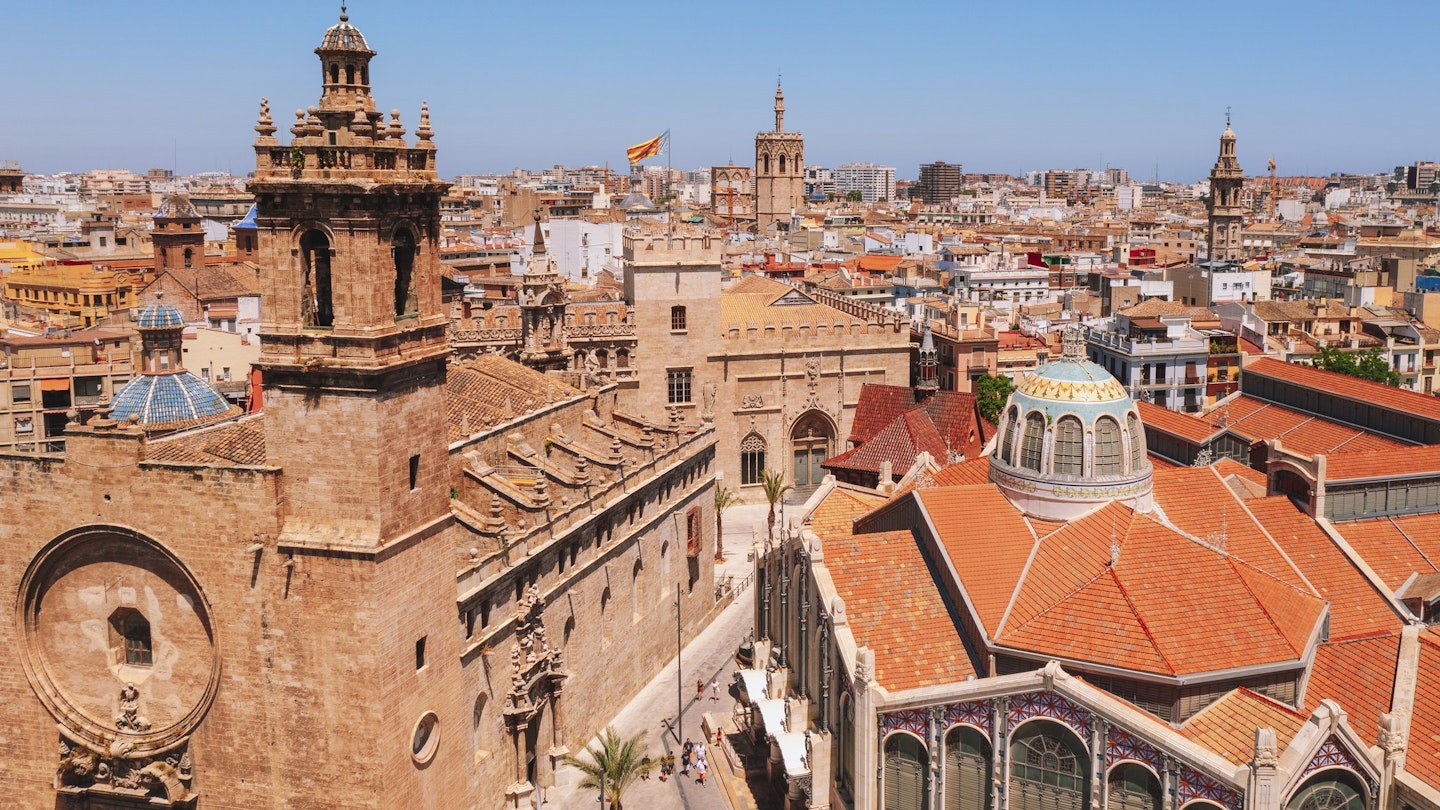
Today, it’s challenging to envision such scenes. The square, adorned with elegant buildings and lively visitors snapping selfies, leads to the iconic Mercado Central, one of the city’s most cherished attractions. While the square appears vibrant and joyful, beneath its facade lies a tragic history that cannot be ignored.
Another notable event in this square’s history involves Cayetano Ripoll, the last person executed under the Spanish Inquisition. Accused of heresy for not adhering to Catholic practices, he was arrested in 1824 and hanged on July 31, 1826. While the official punishment was to burn him at the stake, authorities opted for a less brutal presentation, merely painting flames on the gallows.
Gruesome Entertainment: Bullfights in the Plaza
Grim entertainment was not limited to executions. Plaza del Mercado also hosted fatal bullfights, attracting crowds eager for the spectacle. Historical accounts recount events like the two-day bullfighting festival in 1459, where a lion and a bull were pitted against each other, showcasing the era’s grim yet captivating culture.
Overlooking Plaza del Mercado, La Lonja de la Seda, built between 1482 and 1533, is an exemplar of late-Gothic architecture and a UNESCO World Heritage Site. This historic building represents the wealth and power of Valencia during its Golden Age of commerce. Visitors can explore its stunning design for a small entry fee, although an audio guide offers deeper insights into its history.
Conclusion: Unveiling the Layers of History
Valencia’s Plaza del Mercado serves as a vivid reminder of the city’s dark history, juxtaposed against its modern vibrancy. From the tragic fate of Margarida Borrás to the last execution of the Spanish Inquisition, these stories continue to resonate. As you explore this fascinating area, consider how history shapes our understanding of identity and community.